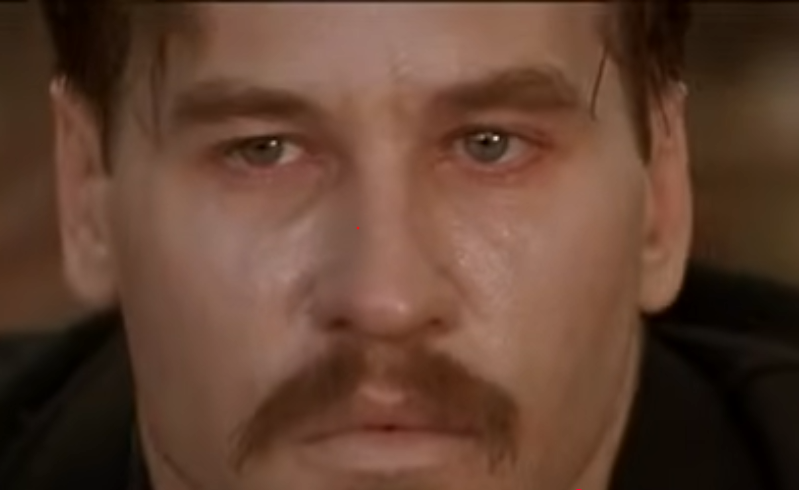

The Cold Dawn Campfire Confrontation
The scene unfolds in the harsh grey light of dawn as a band of weary posses prepares to ride out into dangerous desert territory. Tension hangs heavily over the campsite as horses shift uneasily and armed men gather their gear for the brutal blood feud ahead. Turkey Creek Jack Johnson watches Doc Holliday struggle with his agonizing sickness, questioning why a dying man would risk everything for a bloody personal vendetta. He bluntly points out that Doc is in no physical condition to endure a punishing ride across the unforgiving Arizona terrain. Doc looks up through bloodshot eyes and delivers the quiet truth that he is riding because Wyatt Earp is his friend. When Johnson dismissively retorts that he has plenty of friends, Doc delivers a devastating truth about what real loyalty actually costs. The cold desert air seems to freeze as the profound weight of Doc’s words sinks deeply into the consciousness of everyone present. This quiet exchange elevates a violent revenge campaign into an immortal masterpiece exploring human bond and unconditional sacrifice.
Decoding The Profound Mechanics Of Brotherhood
As the conversation lingers over the campsite coals, the sharp dialogue strips away all surface-level ideas of casual friendship. Doc Holliday coughing through his terminal tuberculosis contrasts sharply with his fierce, unyielding commitment to Wyatt’s crusade. Johnson views friendship as a convenient social alliance, something easily discarded when the physical stakes become dangerously high. Doc sees his connection to Wyatt as a sacred pact that transcends physical suffering, mortality, and self-preservation. The script writers brilliant interaction highlights how rare true loyalty is in a lawless world driven by greed and violence. Kilmer delivers his response with a gentle, raspy quietness that carries infinitely more power than a roaring battlefield speech. The underlying tragedy of his condition makes his absolute devotion feel both heartbreaking and immensely heroic to the audience. By contrasting selfish logic with selfless devotion, the scene transforms a simple western interaction into a legendary philosophical statement.
Val Kilmer Subverting The Tragic Hero
What makes this specific exchange so unforgettable is the extraordinary grace and vulnerability Val Kilmer brings to every single frame. Kilmer intentionally avoids the exaggerated, dramatic acting styles that often plague historical period pieces and traditional action films. His physical posture is frail and trembling, yet his eyes gleam with an untouchable iron will that commands immediate respect. During the take, he pauses mid-sentence to suppress a painful cough, allowing his physical weakness to accent his inner strength. His quiet smirk in response to Johnson reveals a profound pity for men who have never known true devotion. Kilmer broke away from standard Hollywood tough-guy archetypes by allowing genuine tenderness to shine through a lethal gunman. Fellow cast members were visibly moved by the quiet intensity Kilmer maintained throughout these emotional outdoor shooting takes. This delicate balance of physical decay and spiritual strength created one of the most iconic performances in modern film history.
Behind The Scenes Of The Campfire Set
Behind the cameras, the production team worked endlessly under harsh weather conditions to achieve this realistic, gritty atmosphere. Director George P. Cosmatos insisted on utilizing natural dawn light to emphasize the desolate isolation of the Arizona desert backdrop. Cinematographer William A. Fraker framed the actors in intimate close-ups that captured every trace of dust, sweat, and emotion. The production team kept the set extremely quiet to allow Kilmer’s delicate vocal nuances to be captured cleanly by audio equipment. Russell and Kilmer spent countless hours discussing the deep historical connection between Wyatt Earp and Doc Holliday prior to shooting. The grueling filming schedule in the dusty outdoor wilderness naturally added a layer of physical fatigue to the actors’ faces. That unpolished real-world exhaustion bled directly into the camera lens, giving the scene an undeniable layer of visceral authenticity. Every piece of leather, every flickering campfire ember, and every quiet breath was crafted with meticulous artistic care.
How Social Media Rekindled The Phenomenon
Decades after its original theatrical debut, this poignant moment continues to go viral across digital entertainment platforms around the world. Content creators regularly share short high-definition clips of the campfire scene to analyze its emotional power and masterclass dialogue. Comment sections are filled with millions of fans reflecting on the true meaning of loyalty and praising Kilmer’s flawless delivery. Viral edits pairing Doc’s memorable line with emotional cinematic soundtracks routinely rack up vast engagement across social feeds. New generations of moviegoers are discovering Tombstone through these bite-sized video clips shared across global networks daily. The quote has transcended the Western genre entirely, becoming a universal cultural symbol for standing by someone through dark times. Its enduring digital popularity proves that genuine emotional truth will always captivate audiences regardless of changing entertainment trends.
The Psychological Reality Of Sacrifice
Analyzing why this brief exchange strikes such a powerful chord requires looking into the human longing for unwavering loyalty. In a world where relationships are frequently transactional and conditional, Doc Holliday represents an absolute, selfless ideal. Doc has nothing left to gain in this life, yet he willingly steps into the fires of war simply to support a brother. He understands that Wyatt would do the exact same for him, creating a mutual bond forged in mutual respect and shared hardship. The psychological power of the scene stems from Doc’s total rejection of fear, pain, and self-interest in favor of love. Audiences are deeply moved by characters who choose loyalty over self-preservation when facing absolute disaster and death. This moment touches something ancient within the human spirit, reminding us that love and loyalty are worth dying for.
The Dying Craft Of Patient Cinema
In an era of filmmaking dominated by relentless special effects and fast-paced editing, this quiet interaction stands out as a rare gem. Modern action movies frequently skip over quiet character beats to rush toward the next loud explosion or CGI spectacle. Tombstone dared to pause the narrative momentum to let two men talk quietly beside a campfire about the meaning of devotion. The scene relies on subtle pauses, eye contact, and emotional depth to build a sense of gravity that stays with the viewer. This commitment to patient visual storytelling is becoming increasingly rare in an industry focused on fast consumption. By trusting the audience to appreciate nuanced writing and quiet acting, the filmmakers created a moment that feels truly immortal. It serves as a timeless reminder that character depth and genuine emotion will always outperform big studio visual effects.
Experience Doc Holliday’s Loyalty In Motion
There is simply no substitute for watching Val Kilmer deliver these heart-wrenching words in the original video clip below. To truly feel the cold morning air, the heavy silence, and the emotional power of Doc’s devotion, you must see it unfold. Prepare to be moved by one of the most powerful demonstrations of friendship ever put on celluloid. Watch the iconic movie clip below and witness cinematic history at its absolute finest.