
VAL KILMER DELIVERS A MASTERCLASS IN SUBLIME DEBAUCHERY AND THREATENING WIT THAT FOREVER CHANGED WESTERN CINEMA HISTORY.
The Smoky Parlor Gambling Den Gathering
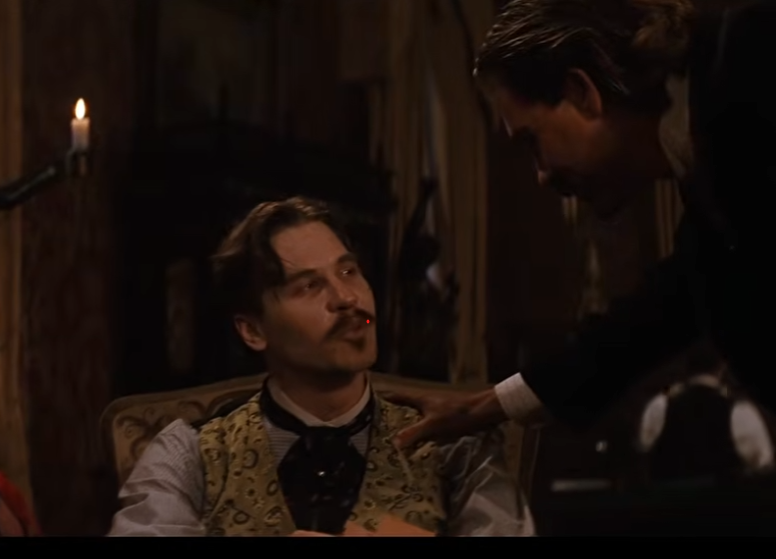
The scene opens in the suffocating haze of a dim Tombstone saloon card room filled with heavy tobacco smoke and clinking whiskey glasses. Doc Holliday sits hunched over a green felt poker table surrounded by whiskey bottles, sweat, and tension. His partner Kate hovers nearby as Wyatt Earp walks in to check on his visibly deteriorating friend. Wyatt gently urges Doc to take a break after hours of relentless gambling and heavy drinking. Doc immediately dismisses the concern with a brilliant smirk and a slurred declaration that he has not yet begun to defile himself. His raspy voice carries an aristocratic southern drawl that instantly commands the attention of every gunman in the dimly lit saloon. The stark contrast between Wyatt’s stoic concern and Doc’s self-destructive hedonism lays the foundation for one of the film’s finest character interactions. Every rustle of playing cards and clink of glass heightens the quiet suspense hovering over the high-stakes table.
The Escalating Saloon Card Game Confrontation
As the card game continues Doc casually rake in another massive pile of poker chips after laying down an absurd winning hand. The volatile outlaw Ike Clanton slammed his hands onto the table and accuses Doc of cheating with improbable luck. Instead of reaching for his revolvers Doc reacts with patronizing amusement and offers a mocking smile to his furious accuser. Doc dryly suggests that perhaps poker is simply not Ike’s game and mockingly offers to try a spelling contest instead. The razor-sharp insult cuts deep into Clanton’s fragile ego driving the unhinged cowboy into a spittle-flying rage. Ike hurls vicious curses at Doc and the tavern staff as tension reaches a violent boiling point inside the crowded room. Doc remains entirely unfazed by the threat of loaded guns hovering mere inches from his chest. His absolute refusal to show fear destabilizes the hot-headed outlaws far more than a drawn weapon ever could.
Val Kilmer Surrendering To Character Madness
What makes Val Kilmer’s performance in this sequence so extraordinary is his total commitment to physical and emotional authenticity. Kilmer spent weeks perfecting Doc Holliday’s refined Georgia accent and fluid card-handling sleight-of-hand movements. During this take his eyes glazed over with a haunting combination of tubercular fever, heavy intoxication, and brilliant intellect. The famous line about defiling himself was delivered with a subtle flick of his wrist and an effortless theatrical flair. Kilmer balanced the tragedy of a brilliant doctor dying of illness with the wild charisma of a lethal gunslinger. His physical instability throughout the scene makes Doc feel dangerously unpredictable to everyone sitting around him. Cast members reported feeling genuinely captivated by the electric unpredictability Kilmer brought to every single frame of the shoot. This performance broke away from conventional cowboy tropes to create a deeply human and mesmerizing cinematic figure.
Behind The Scenes Of The Shootout Set
Filming this intricate saloon confrontation required meticulous coordination from the camera crew and production designers under tight schedules. Director George P. Cosmatos and cinematographer William A. Fraker used rich amber lighting to simulate flickering oil lamps across the set. The atmospheric haze inside the saloon was generated using artificial smoke machines that caused genuine discomfort for the cast. Kilmer maintained his slurred voice and physical posture between takes to preserve the rhythm of his performance. The prop department ensured authentic period-accurate playing cards and vintage glassware were used on the poker table. Actor Stephen Lang brought an explosive, unhinged energy to Ike Clanton that perfectly counterbalanced Kilmer’s icy composure. The grueling heat inside the Arizona soundstage added an authentic sheen of sweat to every actor’s brow. This unvarnished production effort created a physical space that felt filthy, claustrophobic, and entirely real.
The Digital Resurgence Of A Masterpiece
Decades after Tombstone debuted in theaters this iconic saloon clip continues to go viral across social media channels worldwide. Short video edits showcasing Doc Holliday’s witty barbs rack up millions of views and engagement across digital entertainment feeds. Movie buffs and content creators regularly break down Kilmer’s line delivery, timing, and posture in detailed breakdown videos. Comment sections across platforms are packed with fans quoting Doc’s spelling contest joke with deep affection and humor. A new generation of film lovers continues to discover the movie through these bite-sized, high-definition clips shared daily. The quote regarding self-defilement has become a timeless pop-culture meme used to describe chaotic nights out and endless fun. Its enduring popularity demonstrates how brilliant screenwriting and magnetic acting easily transcend generational divides.
The Psychology Of Self-Destructive Dominance
Analyzing why this sequence resonates so deeply requires examining how Doc Holliday utilizes his mortality as a weapon. Standard action heroes project strength through muscular intimidation and aggressive physical dominance over their enemies. Doc Holliday completely flips this dynamic by embracing his terminal disease and projecting a total lack of self-preservation. The outlaws realize they cannot intimidate a man who views his own impending death as a welcome relief. This psychological advantage allows Doc to dominate men who are physically stronger and far better armed than himself. Audiences are captivated by characters who possess absolute fearlessness in the face of imminent violence. By treating a life-or-death confrontation as a casual game Doc demoralizes his opponents before a single bullet flies. This psychological warfare remains one of the most brilliant aspects of character design in Western movie history.
The Lost Art Of Character-Driven Westerns
Modern action movies often rely on fast-paced CGI action and constant explosions rather than patient character development. Tombstone succeeded because it allowed long stretches of dialogue and subtle eye contact to build unbearable suspense. This saloon scene relies entirely on sharp dialogue, sharp comedic timing, and rich character interaction to captivate viewers. There are no digital effects or artificial camera tricks hiding behind the performances at that card table. The scene breathes naturally, giving every insult and pause the time required to land with maximum emotional impact. Contemporary filmmakers rarely trust audiences to engage with quiet tension and complex character dynamics in action films. Rewatching Kilmer’s performance reminds us why authentic acting and intelligent screenwriting will always outshine digital visual effects.
Witness Doc Holliday’s Greatest Barroom Moment
There is no substitute for watching Val Kilmer deliver these classic lines in full motion to appreciate his artistic genius. From the sharp wit to the tragic undertones of his sickness this clip represents Western filmmaking at its absolute peak. Step back into the dusty Tombstone saloon and watch one of cinema’s greatest actors take control of the screen. Watch the full high-definition scene below and experience cinematic perfection for yourself.
https://www.youtube.com/watch?v=Wo7_0286E7E&t=18s