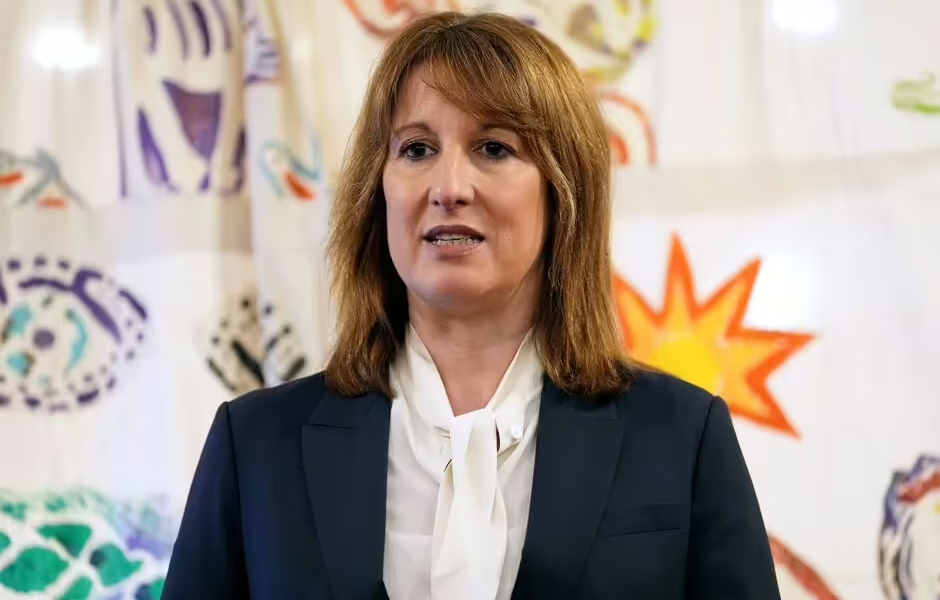


Rachel Reeves pay-per-mile car tax fee could deter motorists from switching to EVs (Image: Getty)
Rachel Reeves’ pay-per-mile plan could be in complete tatters before it’s even got off the ground, with new research showing road users are prepared to completely turn their backs on electric cars. The Chancellor confirmed that a new 3p per mile electric car charge would come into effect from 2028, with hybrid models charged at a lower rate of 1.5p per mile.
The new fee could see motorists pay around £240 per year if travelling the average of 8,000 miles per annum. Meanwhile, a journey from London to Edinburgh would set road users back over £12, with a trip between John O’Groats and Lands End coming in at around £25.

Electric car pay-per-mile fees are set to launch in 2028 (Image: Getty)
The pay-per-mile fees are being introduced to offset the loss of fuel duty revenues as more motorists switch away from combustion cars to new EVs. However, there are concerns that the new charges could backfire, with road users likely to be put off making the switch altogether.
New data from WhatCar? Has backed this up, with research suggesting road users were set to ditch EVs altogether. A poll of 4,368 in-market car buyers found that 52% of respondents would be deterred from making the switch if the rule were implemented.
According to the data, more than a third of respondents (38%) who were already planning to buy an electric car said they would reconsider if a pay-per-mile charge was added. The fee looks set to be highly controversial, with a further two-thirds of road users believing that EV owners should not have to pay an additional tax.
According to the poll, only 13% would be happy to pay the 3p per mile fee, with only 20% admitting that the new charge would be a good idea at all.
Claire Evans, WhatCar? Consumer editor said: “Introducing an additional tax on EVs won’t only be unpopular, it will clearly make many drivers who are intending to buy an EV rethink their plans. Coming hot on the heels of the Government’s Electric Car Grant, which stimulated demand for EVs, it sends a terrible mixed message.”
Dan Tomlinson, Exchequer Secretary to the Treasury, backed the introduction of the new fees in the Government’s consultation report.
He argued: “If we do nothing, then by 2030 around one in five car drivers are expected to pay no fuel duty at all, while other motorists will continue to contribute an average of £480 a year. Given all cars cause congestion and wear and tear on the roads, this is not a fair outcome.
“That’s why the government will introduce electric Vehicle Excise Duty (eVED) from April 2028.”
Labour’s new plot to make it harder for pensioners over 70 to keep driving licence
Labour could be about to introduce another simple policy to their eyesight testing proposals, which could leave many pensioners off the road.

New driving licence rules could impact older motorists (Image: Getty)
Labour looks set to make it harder for over-70s to stay on the roads with new driving licence rules likely to be introduced later this year. The Government is pushing for the introduction of eyesight testing for older drivers, with checks set to become mandatory for retaining a licence over the age of 70.
The Department for Transport (DfT) has launched a consultation examining the issue ahead of any updates being confirmed. The Government consultation goes into extra details about Labour’s exact plans, with officials making a major admission.

The Government has opened a consultation over new mandatory eyesight rules (Image: Getty)
Instead of using a central database of eyesight test information to check against applicants, the DfT has suggested that the onus may be on motorists to prove they have undergone checks every three years.
According to the DfT consultation: “Consideration is being given to a licence holder providing proof that they have attended an eye test, which would include confirming the outcome from whoever conducted the test.”
Failure to provide these details to the DVLA at renewal is likely to risk motorists not being handed a new photocard and effectively being banned from the roads. The consultation report added: “Considerations include having tests administered by opticians, the NHS or through bespoke test centres for driving eyesight tests.
“We would require evidence of the outcome of the test within a set timeframe at each licence renewal. This could be provided by the licence holder, the person who conducts the test or both.”
However, at this early stage, the DfT stressed they have not ruled out pushing testers to report information to the DVLA instead. This would likely ensure motorists don’t accidentally forget to submit their results, leading to dozens of pensioners off the roads.
The report explained: “Alongside this, we could look to introduce a legal obligation on the person conducting the test to report test results directly to the DVLA.
“Introducing a mandatory reporting requirement would give assurance that a licence holder meets the required vision standards and supports proactive intervention where vision may pose a road safety risk.”
The consultation is a chance for industry experts to have their say over the plans, with final details to be announced soon after.
Later in the consultation, the DfT asks consultation respondents “who should be responsible for notifying the DVLA of the outcome of the mandatory eyesight test”, suggesting that this is still up for debate at this stage.