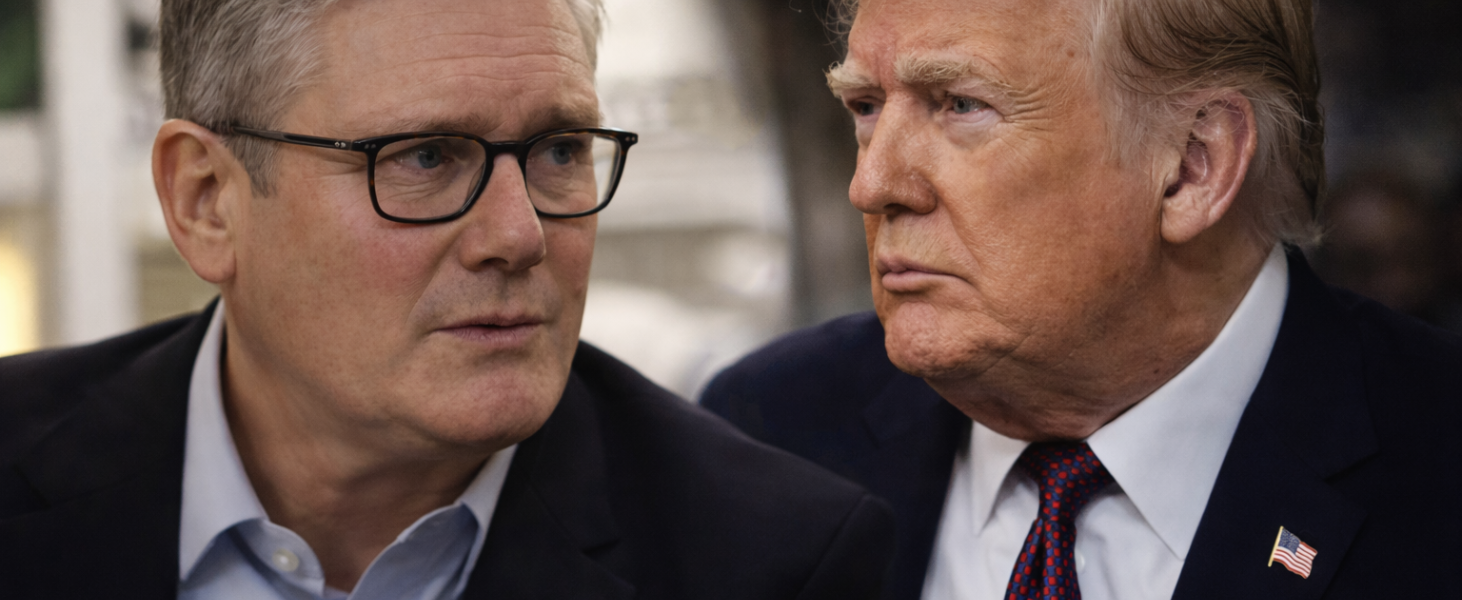

Summary: The White House has publicly criticised Sir Keir Starmer for refusing to back a ban on first-cousin marriage, calling it a “civilisational” concern. Conservatives say Labour is blocking scrutiny of a practice linked to higher genetic risk, while the row collides with wider UK-US tensions over free speech and Labour’s posture towards Elon Musk’s X.
White House takes aim at Starmer over cousin marriage
Sir Keir Starmer is facing fresh pressure after the White House attacked Labour’s refusal to support a ban on first-cousin marriage.
Sarah Rogers, described as Donald Trump’s “free speech tsar”, shared a video of Starmer rejecting calls to back a ban during Prime Minister’s Questions, framing it as an example of what the US administration calls “civilisational” concerns.
“I’ve received some questions about what we mean, in our National Security Strategy, when we invoke ‘civilisational’ concerns. So I’m tweeting a relevant news item.”
What Starmer said in Parliament
The criticism centres on a Commons exchange in March, when Conservative MP Richard Holden pressed the Prime Minister to let a private member’s bill progress.
Starmer’s reply was blunt and left no room for misreading.
“We’ve taken our position on that bill, thank you.”
Holden argues that Labour’s stance amounts to blocking debate rather than meeting the issue head-on, particularly around public health and safeguarding.
Tory push: health, women’s rights, and closed communities
First-cousin marriage is legal in the UK. Critics say legality is not the same as being risk-free, pointing to an increased chance of children inheriting genetic conditions when parents are closely related.
Holden has linked the policy argument to health impacts and the pressures that can exist in tightly controlled family networks.
“On Friday, this Government has a chance to let my bill go through to ban first-cousin marriage to committee stage. Will the Prime Minister think again before instructing his whips to block this legislation?”
He later accused Labour of dodging the issue rather than offering a clear explanation of its position.
“It is an issue bound up with serious health implications, closed communities and the isolation of the vulnerable.”
NHS row adds fuel to the argument
The dispute is sharpened by last year’s backlash after an NHS England Genomics Education Programme article was criticised for highlighting claimed “benefits” of cousin marriage despite acknowledged increased risk of birth defects.
Campaigners point to conditions such as sickle cell disease and cystic fibrosis as examples of illnesses more likely to be carried or occur when parents are closely related, arguing that public messaging should prioritise risk clarity, not cultural sensitivity theatre.
Why Washington is piling in now
Rogers’ intervention did not land in a vacuum. The Trump White House has also criticised European migration policy in recent security messaging and has framed cultural cohesion as a strategic issue.
She also used the cousin-marriage row to needle Labour on speech and regulation, suggesting the UK’s approach to online controls is sliding towards heavy-handed censorship.
Same week, same pattern: Labour and the free speech clash
This row overlaps with a wider UK-US friction point: Labour’s stance towards X and Ofcom enforcement threats. Washington has warned that banning major platforms would chill speech, especially while Labour argues regulation is needed to protect users.
The political picture is simple: Starmer is being squeezed from the right at home and mocked from across the Atlantic, while Labour tries to treat a serious, sensitive topic like a procedural inconvenience.
What happens next
Holden’s bill was due for a second reading last Friday but was stalled because the Commons did not sit that day, delaying a crunch moment that would have forced Labour to show its hand in public.
Expect the pressure to keep building. When a government won’t even allow scrutiny, it invites the obvious question: what exactly are they trying to avoid saying out loud?
‘Britain’s Broken’: Ex-Chancellor Zahawi Defects to Reform and Backs Farage for No10


Summary: Nadhim Zahawi has announced he is joining Reform UK, delivering a blunt diagnosis of a “broken” Britain and backing Nigel Farage as the leader he believes can fix a country facing stagnation, crime and illegal migration.
“We came with nothing but hope”… Zahawi’s personal case for Reform
In his announcement video, Nadhim Zahawi rooted his decision in his own journey to Britain, presenting Reform UK as a return to the values that once made the country successful.
“I was born in Baghdad… We came to these shores in 1979. I was 11 years old. We came with nothing other than hope and determination, but also knowing that this nation was the most civilised nation on earth.”
He argued that the Britain his family arrived in no longer exists in the same form.
“But my friends, today Britain’s broken, and I’m convinced that Britain needs reform.”
“Nothing works”: growth, crime and migration
Zahawi’s core argument was that the British state is failing across the board, economically and socially.
“Nothing works. There is no growth. There is crime on our streets and there is an avalanche of illegal migration.”
He described illegal migration as a crisis that would be treated far more seriously in other countries.
“In anywhere else in the world [it] would be a national emergency.”
Calling for emergency-style action
Drawing on his experience during the pandemic, Zahawi argued that Britain needs the same urgency and focus now.
“Nigel recognises it’s a national emergency, and I think in many ways we need to act in the same way as we did in delivering the vaccine programme.”
He referenced the period when he addressed the nation regularly, emphasising delivery over process.
“I literally had to go on almost nightly just to reassure the nation that we had the team, we had the focus, and that we will deliver.”
The announcement moment
Zahawi’s decision has been widely shared online following the release of the video.
“Last chance saloon”: backing Farage for No10
The most striking section of the speech was Zahawi’s endorsement of Nigel Farage as prime minister.
“I think Britain is drinking in the last chance saloon and it really does need Nigel Farage as prime minister.”
He contrasted Farage with politicians driven primarily by personal ambition.
“I’ve seen politicians come and go… some are motivated and driven by just getting to the seat of power.”
Why Zahawi says Farage is different
Zahawi said his support is based on observing Farage operate on the international stage.
“When he needs to push back, he pushes back. He listens to allies and works with them and has that gravitas and respect.”
He concluded by framing his move as a decision of national interest rather than party loyalty.
“We all have to at some stage look in the mirror and decide what’s best for our country… and that’s why I’ve decided that I’m joining Reform.”