
A far-right linked activist group that blanketed England with thousands of St George’s and Union Jack flags last year has unveiled plans for a vigilante operation to halt small-boat migrant crossings in the Channel, dubbing it “Operation Overlord” in a nod to the D-Day landings. Mr Bridge, co-founder of Raise the Colours, told a podcast he aims to “do the Keir Starmer” by “smashing the gangs” behind the crossings, echoing the Prime Minister’s rhetoric on tackling people smuggling.
Mr Bridge, a football hooligan associated with Birmingham City’s Zulus firm, claimed his group would succeed where the Government has failed. Speaking on the Anything Goes with James English podcast, Mr Bridge said: “We’ve all got this burning passion inside us that we know it’s not right. We want to stop it. We really do want to do the Keir Starmer, we’re going to smash the gangs.”

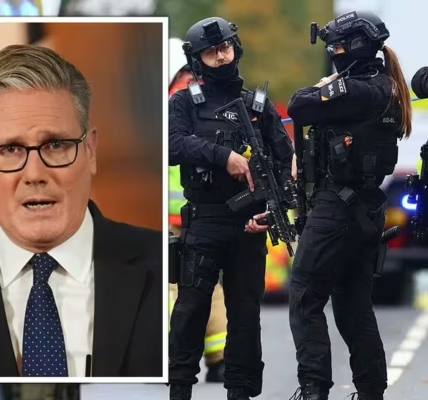
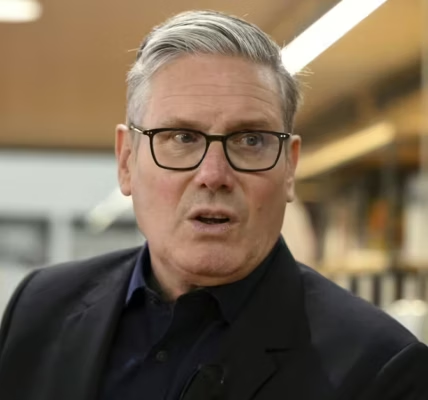
Prime Minister Sir Keir Starmer (Image: Getty)
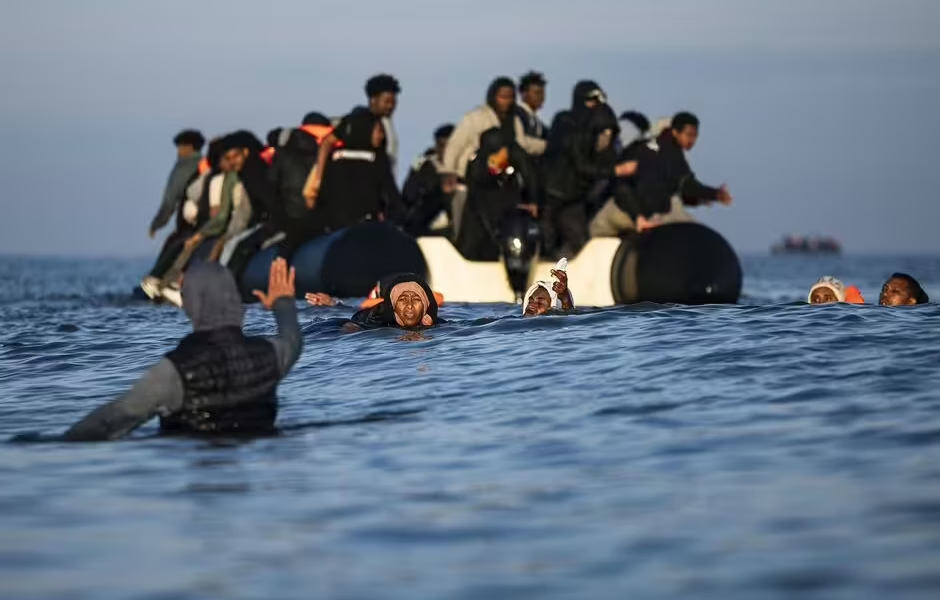
In November, Mr Bridge and associates travelled to Calais, northern France, where social media videos showed them wading into the water to confront migrants in boats and slashing inflatable vessels. Invoking World War II imagery, Mr Bridge said: “You can see Dover and think, ‘Bloody hell, the Germans got this far and we held them back in the war’.” He further described migration as an “illegal invasion.”
He plans to use the winter lull in crossings—due to harsh weather—to prepare for summer action. Mr Bridge predicted: “By this time next year… not one immigrant has come across.” Addressing accusations of extremism, Mr Bridge said: “Hitler was a raving psychopath. That’s not what we’re about.” He claimed Raise the Colours is reclaiming flags from racist groups like the English Defence League (EDL) and National Front.
However, the group has ties to far-right figures, including Danny Tommo, a close ally of former EDL leader Tommy Robinson, who was jailed for a knifepoint kidnapping attempt. Last year, Raise the Colours drew endorsements from Robinson and was accused of stoking racial tensions, though it denied this.
Regarding the presence of the flag at his home, Prime Minister Keir Starmer said: “I am very encouraging of flag-flying.” He noted his family displays a St George’s flag in Downing Street, while cautioning against divisive use.
This story is based on reporting by Novara Media, an independent left-wing news outlet known for investigative journalism on social and political issues, which spoke to Mr Bridge and aid workers in Calais.
Lachlan Macrae, from the Calais Food Collective, said: “Raise the Colours was previously endorsed by Keir Starmer. The reason why they’re coming out and doing this stuff is because they’re emboldened.”
Aid workers blame the Prime Minister’s anti-smuggling language for emboldening such activists.
Mr Macrae described a surge in far-right visitors harassing migrants, wearing stab-proof vests and live-streaming confrontations. He noted increased sabotage, including swastikas on water containers and soap poured into supplies to render them unusable.
Mr Macrae added: “There have always been far-right groups coming to Calais, but we’re seeing more and more as it has become a focal point in the media and politics.” Regarding the feasibility of the activist’s plans, Mr Macrae said: “The claims are preposterous.” He instead attributed pauses in crossings to weather, not vigilantes.
Calais serves as a key hub for migrants fleeing war or poverty, many embarking on perilous journeys from countries like Sudan. Mr Macrae argued: “If you have travelled from Sudan, the way you understand risk is different. People are not going to turn around because there is some angry white guy on the beach screaming at them.”
Mr Bridge, who has a history of football violence, including a three-year ban for brawling, likened the “buzz” of hooliganism to his activism but insisted it’s lawful.
He promised more flags across the UK this year and Mr Bridge vowed: “Legally and lawfully, we’re going to take the bull by the horns and Operation Overlord is going to come into play.”
The Digital ID plan has COLLAPSED! Keir Starmer just surrendered to the public and scrapped the “mandatory” law after massive protests. Nigel Farage is celebrating a historic win against “authoritarianism.”
In a stunning political twist, UK Labour leader Keir Starmer has announced the scrapping of mandatory digital IDs, marking his 13th major U-turn in a series of controversial policy shifts. This decision comes amid intense public backlash, as citizens from all political backgrounds unite against the initiative, highlighting a significant moment in British politics.

The Labour government had initially championed the digital ID scheme as a necessary tool for modern governance and security. However, widespread discontent has forced Starmer to reconsider. Reports indicate that the government is now leaning towards making the digital ID checks voluntary, a move intended to alleviate public concern and allow for a more positive discourse surrounding the benefits of digital identification.
Critics of the policy have been vocal, with many MPs expressing their relief at the reversal. A Labour MP remarked that making the digital ID non-mandatory would help shift the focus to its potential advantages without the contentious baggage of compulsion. This sentiment resonates across the political spectrum, showcasing a rare moment of consensus among parties that typically disagree.
Rupert Low, a prominent figure in the opposition, hailed the decision as a “huge win” for individual liberty, emphasizing the importance of public engagement in shaping policy. Nigel Farage, known for his strong opinions on government overreach, echoed this sentiment, framing the reversal as a victory against authoritarianism.
Starmer’s frequent policy reversals have drawn criticism, with some calling his leadership into question. Observers note that this latest U-turn adds to a growing list of decisions that have sparked public outrage, including tax increases and welfare reforms. The frequency of these shifts raises concerns about the government’s stability and decision-making capabilities.
As the political landscape continues to evolve, this significant policy change reflects the power of public opinion in shaping governance. Citizens are increasingly aware of their influence, and the backlash against mandatory digital IDs serves as a testament to the effectiveness of grassroots activism.
With the dust settling on this latest development, it remains to be seen how the Labour Party will navigate future policy proposals. The public’s response to this U-turn may set a precedent for how the government approaches contentious issues moving forward, emphasizing the need for transparency and accountability in political decision-making.
In a time of increasing scrutiny, Starmer’s latest move may be perceived as a necessary recalibration, but it also underscores the challenges facing his leadership. As the UK grapples with complex issues, the call for a more participatory political process has never been louder.
Venezuela strikes: Keir Starmer breaks silence – PM ‘wants to speak’ to Trump over Maduro ‘capture’

Venezuela is in turmoil as reports emerge that U.S. forces have captured President Nicolás Maduro, sending shockwaves through global politics. UK Prime Minister Keir Starmer has broken his silence, asserting that the UK was not involved in the operation and emphasizing the need to establish the facts surrounding this explosive situation.
Starmer’s comments come amid rising tensions between the UK and U.S. regarding intelligence sharing, particularly concerning the ongoing narco-trafficking crisis linked to Venezuela. While sources deny any cessation of intelligence cooperation, the implications of the U.S. strikes are profound, raising questions about the future of international relations and the stability of the region.
Venezuela, home to the world’s largest proven oil reserves, has long been a focal point of geopolitical interest. The U.S. has characterized the strikes as a necessary measure against 𝒹𝓇𝓊𝑔 trafficking, yet many believe the motivations run deeper, potentially involving control over Venezuela’s vast oil resources.

In a press briefing, Starmer expressed his intent to communicate with President Trump and other allies, underscoring the urgency of the situation. With approximately 500 British nationals in Venezuela, the Prime Minister reassured that the UK government is working closely with its embassy to ensure their safety amid the chaos.
The circumstances surrounding the operation remain murky, with speculation that the UK intelligence community was 𝒄𝒂𝓊𝓰𝒉𝓉 off guard. Starmer’s remarks suggest that the Prime Minister was unaware of the U.S. plans until the news broke, highlighting a potential rift in the traditionally strong Anglo-American alliance.
As the world awaits further details, the stakes are high. The implications of this military action could reshape not only Venezuela’s future but also the geopolitical landscape. With President Trump set to address the nation soon, all eyes will be on his comments for clarity on the U.S. strategy moving forward.
In a rapidly changing situation, the international community is left to ponder the consequences of these bold moves. As the dust settles, the focus will shift to the ramifications for both Venezuela and the U.S.-UK relationship, making this a pivotal moment in modern diplomacy.